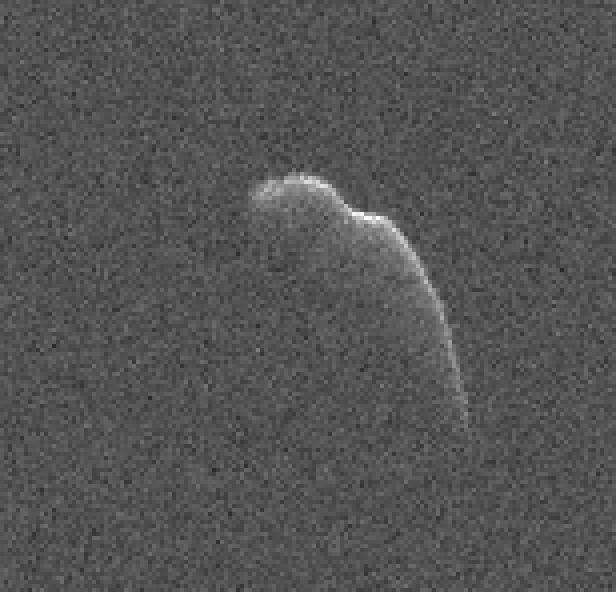
New Horizons
New Horizons made history in 2015 as the first spacecraft to visit Pluto, completing the initial reconnaissance of all the classical planets. It continues through the Kuiper Belt, having flown past Arrokoth (Ultima Thule) in 2019 - the most distant planetary flyby ever attempted.
The Little Spacecraft That Could
New Horizons is remarkably small - about the size of a grand piano at 478 kg. Launched at record speed (58,000 km/h), it reached Jupiter in 13 months instead of the typical 5 years, using a gravity assist to slingshot toward Pluto. The spacecraft hibernated for much of its 9.5-year journey to conserve power and resources.
Pluto Encounter
On July 14, 2015, New Horizons flew within 12,500 km of Pluto's surface, capturing the first detailed images of the distant world. The data returned revealed a heart-shaped nitrogen glacier (Sputnik Planitia), 3,500m mountains of water ice, and evidence of active geology on a world billions of miles from the Sun.
Key Discoveries at Pluto
- Sputnik Planitia: 1,000 km nitrogen ice glacier in the shape of a heart
- Water Mountains: 3,500m high mountains made of water ice
- Atmosphere: Nitrogen atmosphere with haze layers, surface pressure 1/100,000 of Earth
- Geological Activity: Evidence of tectonic activity and cryovolcanoes
- Charon: Massive canyon system on Pluto's moon Charon
Arrokoth (Ultima Thule) - 2019
On January 1, 2019, New Horizons flew past Arrokoth (then known as 2014 MU69), a 36 km long contact binary in the Kuiper Belt - the most distant object ever explored up close. At 6.6 billion km from Earth, signals took over 6.5 hours to reach us.
Communication
New Horizons uses a 2.1-meter dish antenna for communications with Earth's Deep Space Network. At Pluto distances, the data rate was approximately 1-2 kbps - so slow that full Pluto images took months to transmit. The spacecraft uses a plutonium RTG for power.
Current Status
New Horizons continues to fly through the Kuiper Belt, making observations of distant objects and measuring the solar wind at the frontier of heliosphere. It will eventually leave the solar system like Voyager, heading toward interstellar space.
Illustrations