Apollo: Man on the Moon
The Apollo program represented humanity's greatest technological achievement - landing twelve astronauts on the Moon and returning them safely to Earth. Using communications systems that pushed the limits of radio technology, NASA connected billions of people to humanity's first steps on another world.
The Moon Landing
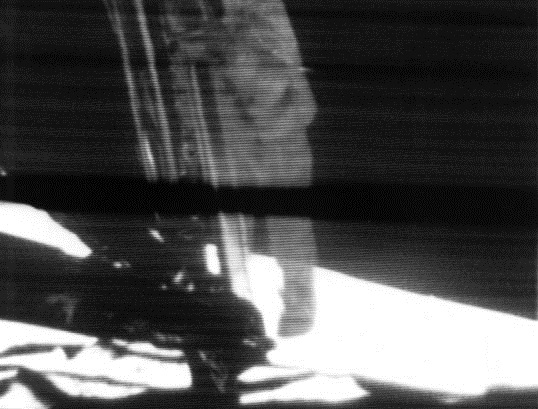
On July 20, 1969, Apollo 11 astronaut Neil Armstrong became the first human to walk on the Moon, declaring it "one small step for man, one giant leap for mankind." The entire world watched via television broadcasts that traveled 384,400 km from the Moon to Earth.
Apollo Communications
The Apollo missions used S-band (2-3 GHz) for voice and telemetry between the Command Module, Lunar Module, and Earth. The Manned Spaceflight Network of tracking stations around the world provided continuous communication.
- S-band Transmitter: 2 watts for voice, 10 watts for telemetry
- VHF Receiver: For astronaut-to-astronaut communication on lunar surface
- S-band Antenna: High-gain parabolic dish on Command Module
The Space Race
Apollo was born from the Cold War space race between the United States and Soviet Union. After Soviet cosmonaut Yuri Gagarin became the first human in space in 1961, President John F. Kennedy committed the nation to landing a man on the Moon before the decade's end.
Apollo Hardware
- Saturn V Rocket: 110.6 meters tall, 2.9 million kg liftoff weight
- Command Module: 3 astronauts, reentry capsule
- Lunar Module: 2 astronauts, lunar landing craft
- Service Module: Propulsion, power, oxygen for Command Module
Lunar Surface Operations
Apollo astronauts spent up to 3 days on the lunar surface, conducting experiments and collecting 382 kg of Moon rocks. Apollo 15-17 brought the Lunar Roving Vehicle (LRV), extending their exploration range to 28 km from the landing site.
Legacy
Apollo represents the high-water mark of human space exploration. The communications, computing, and materials science developed for Apollo laid the foundation for modern aerospace technology. The twelve Apollo astronauts remain the only humans to have walked on another world.
Illustrations


